


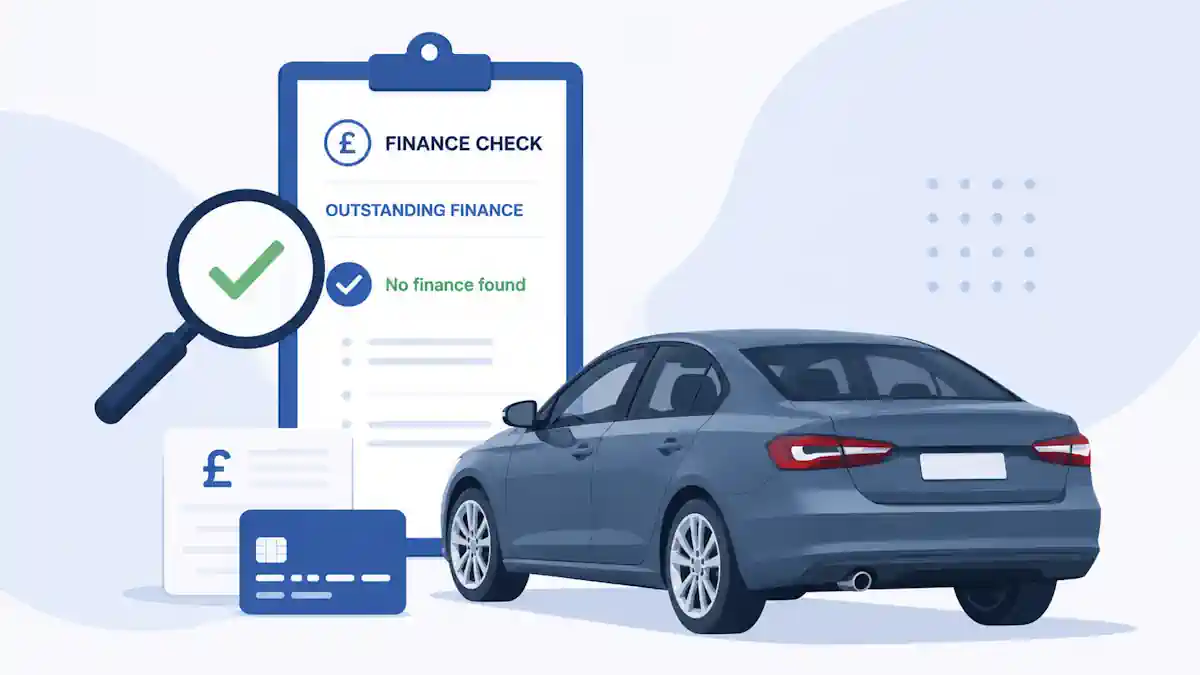
Buying a used car with outstanding finance can turn an exciting purchase into a stressful dispute. The finance provider may still have rights over the vehicle. In limited circumstances, a private buyer who purchases in good faith and without knowing about the finance may have legal protection.
Why outstanding finance matters
Many cars are bought through hire purchase or personal contract purchase agreements. Until the agreement is settled, the seller may not have the right to transfer clear ownership of the vehicle.
A convincing advert, a V5C registration certificate and a set of keys do not prove that the seller owns the car or that any finance on it has been cleared. Check the vehicle's history before agreeing to buy, then ask the seller to explain any outstanding finance marker.
What to check before paying
Use the registration number to obtain a vehicle history report that includes an outstanding finance check. Compare the report's details with the car and its paperwork. Confirm that the make, model, colour and vehicle identification number (VIN) all match.
If the report identifies outstanding finance, ask for the lender's name and the relevant agreement details. Contact the lender using details obtained independently, such as those published on its official website. Do not rely solely on a telephone number supplied by the seller.
Paying a settlement figure
In some private sales, the lender may allow the buyer to pay the settlement amount directly, with any remaining balance paid to the seller. Confirm the settlement figure and payment arrangement with the lender in writing before transferring any money.
Keep evidence of the sale
Retain a copy of the advert, messages, vehicle history report, receipt and proof of payment. The receipt should identify the vehicle, buyer, seller, amount paid and date of sale. It should also include the seller's written declaration about whether any finance remains outstanding and how it will be settled.
Never feel pressured to complete a purchase while important questions remain unanswered. A genuine seller should understand why you need to verify the position. If you cannot confirm that the finance will be settled and that the seller has the right to sell the vehicle, do not proceed with the purchase. Consider seeking independent legal advice if ownership is disputed.