


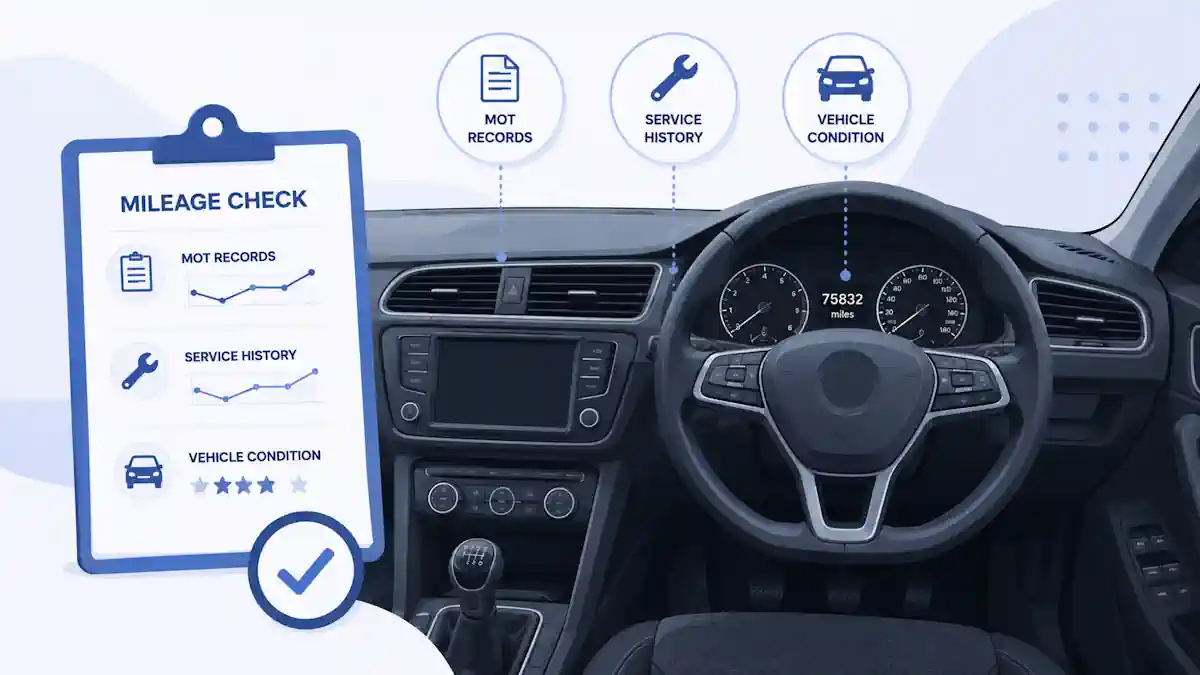
A car's mileage helps determine its value and likely maintenance needs. An altered odometer can conceal wear and lead a buyer to pay more than the car is worth.
Start with the MOT history
Record the odometer reading shown at each MOT test and review the sequence from oldest to newest. The reading should normally rise over time. A lower later reading, an unusually small increase or a long period with little or no recorded use deserves an explanation.
Check whether each reading is recorded in miles or kilometres, especially if the vehicle has been imported. A change of unit can otherwise appear to be a mileage discrepancy.
An inconsistency is not automatic proof of fraud. Testers can make data-entry errors, instrument clusters can be replaced and a vehicle may spend time off the road. A gap in its MOT history may also have a legitimate explanation, such as a period when it was declared SORN. What matters is whether all the available evidence tells a consistent story.
Compare the paperwork
Look for dated service invoices rather than relying on service-book stamps alone. Invoices often include the vehicle's mileage, registration number and details of the work completed. Compare these figures with the MOT records and the odometer reading displayed during your inspection.
Check that the dates and readings progress logically. Ask the seller about any gaps or inconsistencies and request supporting evidence for a replacement instrument cluster or corrected MOT record.
Inspect wear inside the car
Pedal rubbers, the steering wheel, the driver's seat bolsters and frequently used switches all wear with use. Heavy wear on a supposedly low-mileage car should prompt closer inspection, although motorway mileage can leave fewer visible clues than repeated short journeys.
Use condition as supporting evidence
Condition cannot establish a vehicle's mileage by itself. Treat it as one part of the picture alongside its MOT records, service history and the seller's explanation.
Decide using the full history
Pause if separate sources disagree or the seller dismisses reasonable questions. A vehicle history report can bring recorded odometer readings together, making unusual changes easier to identify before you commit to the purchase.