

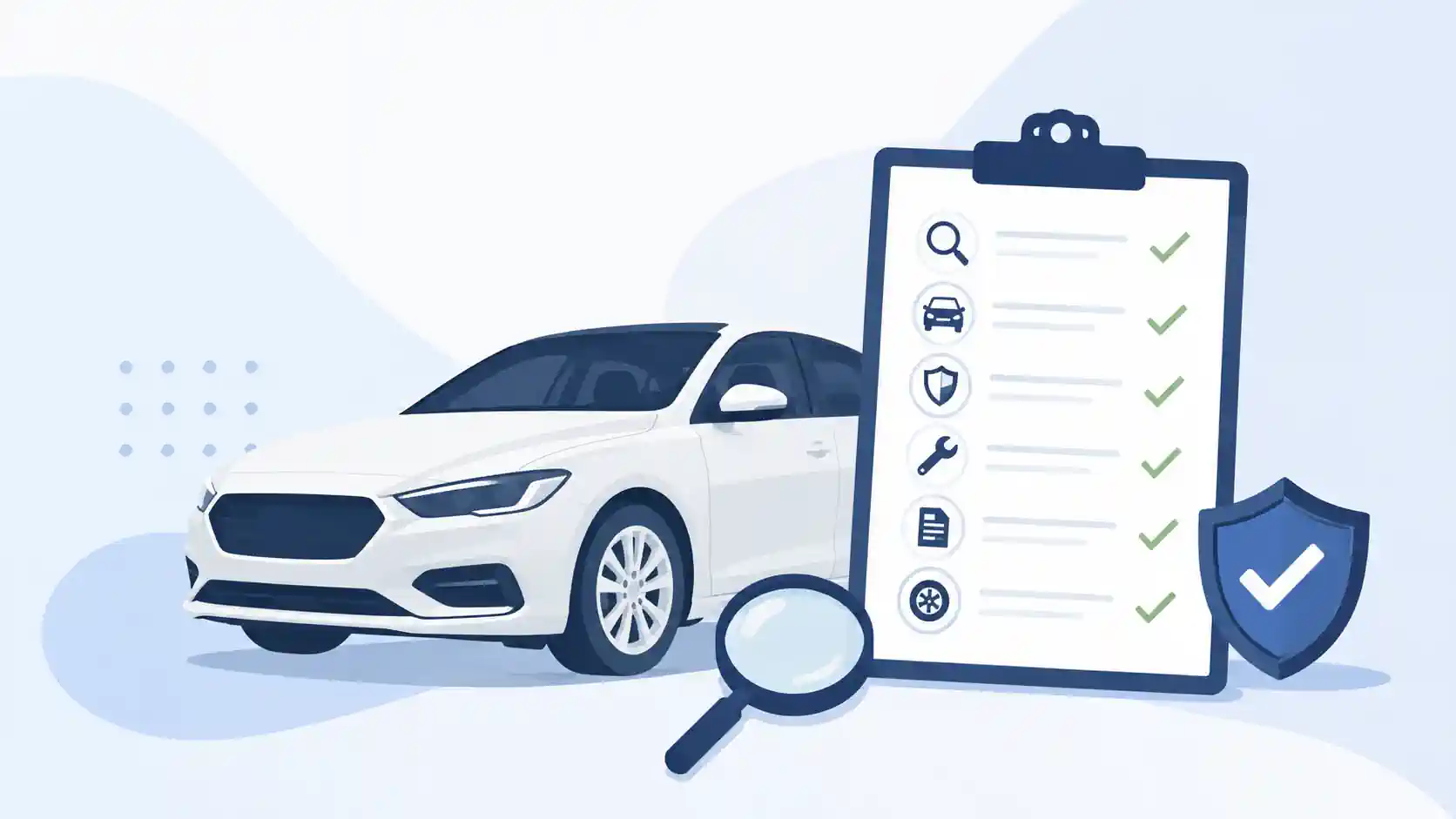
Thinking about buying a used car? Preparing before you view it can save you money and help you avoid trouble. Even a nice-looking car can hide expensive problems. This straightforward checklist will help you inspect the vehicle and verify its history before committing to the purchase.
Inspect the car in daylight
View the car in daylight and, if possible, when it is dry. Rain and poor lighting can conceal scratches, dents and differences in paint colour.
Check for:
- Dents, scrapes, corrosion and bubbling paint, particularly around the wheel arches and sills
- Differences in paint colour or finish that may indicate a previous repair
- Uneven panel gaps or panels that do not sit correctly
- Chips or cracks in the windscreen and windows
- Damaged wheels, including significant cracks or distortion
- Tyre cuts, bulges, uneven wear and insufficient tread
The legal minimum tyre tread depth for most cars is 1.6 mm across the central three-quarters of the tread and around its entire circumference. Uneven wear may indicate incorrect wheel alignment, worn suspension or unsuitable tyre pressures.
Look under the bonnet
You do not need to be a qualified mechanic to spot obvious problems. If possible, inspect the car before the engine has been started so that you can see how it starts from cold.
With the engine switched off, check that:
- The engine oil is between the minimum and maximum marks
- The coolant is at the correct level, with no signs of contamination or leakage
- The battery is secure and has no obvious leaks or severe corrosion
- Visible hoses and belts are intact and free from serious cracks
- There are no obvious fluid leaks in the engine bay or beneath the car
Engine oil colour varies by engine and usage, so dark oil does not necessarily indicate a problem. Coolant is also available in several colours. Never remove the coolant cap while the engine is hot or pressurised.
Inspect the interior
Do not let air fresheners or freshly fitted seat covers distract you from the condition of the cabin.
Check:
- The odometer reading against the car's age, condition, MOT history and service records
- Dashboard warning lights illuminate as expected and no fault lights remain on after the engine starts
- Windows, mirrors, lights, wipers and washers work
- Air conditioning, heating and heated screens operate correctly
- Seats, trim and controls are consistent with the car's claimed mileage
- Carpets and floor mats are dry, with no signs of water ingress
- The spare wheel or inflation kit is present and usable, where supplied
- The jack, locking-wheel-nut key and other original tools are present
- Handbooks and service records are included
- A spare key is available
There is no single correct annual mileage. What matters is whether the displayed mileage is consistent with the MOT history, service records and overall condition of the car.
Check the VIN and accessories
Confirm that the vehicle identification number (VIN) shown in the car matches the V5C registration certificate and any history report. Where possible, check it in more than one location and look for signs of alteration or tampering.
Also inspect:
- Mirrors for damage and correct operation
- Headlights, brake lights, fog lights and indicators
- Washer jets
- The parcel shelf and boot trim
- The fuel filler flap and locking mechanism
- Driver-assistance equipment, cameras and parking sensors
- Charging cables if you are buying an electric or plug-in hybrid vehicle
Missing accessories may be expensive to replace, so include their cost when considering the price.
Take a test drive
Make sure you have the owner's permission and appropriate insurance before driving the car. Test it on different types of road where possible.
Listen and feel for:
- Knocking, grinding, whining or other unusual noises
- Brakes that judder or pull the car to one side
- Steering vibration or a tendency to pull
- A clutch that slips or does not engage smoothly
- Gears that are difficult to select or make a crunching sound
- Suspension noise over uneven surfaces
- Warning lights that remain illuminated
- Excessive exhaust smoke once the engine is warm
Check that the parking brake holds the car securely. If the car does not drive as expected, arrange an independent inspection or walk away.
Check the paperwork
Do not rely on documents alone, but make sure the records support the seller's description.
Check:
- The V5C registration certificate
- The MOT history
- Service records and dated invoices
- Receipts for major work, such as a cambelt, clutch or brakes
- Evidence of any accident repairs
- The vehicle's finance, theft and insurance write-off history
- Whether any safety recalls remain outstanding
The V5C identifies the registered keeper; it is not proof of ownership. In a private sale, ask why the seller's details differ from the V5C if they do, and inspect the car at the registered keeper's address where possible.
Be cautious if important documents are missing or the seller's explanation does not make sense.
Buying from a retailer
When you buy from a retailer, the Consumer Rights Act 2015 generally requires the car to be:
- Of satisfactory quality, considering factors such as its age, mileage and price
- Fit for any particular purpose made known to the retailer
- As described
A car sold for use on the road must also be roadworthy.
A retailer may include a warranty, but there is no general requirement for every used car to come with a three-month warranty. A warranty is additional to your statutory rights and does not replace them.
Check the car carefully even when buying from a professional retailer. A polished appearance does not guarantee a fault-free vehicle. Read the sales agreement and retain the advert, invoice, messages and payment records.
Buying from a private seller
Private purchases usually provide fewer legal protections than purchases from a retailer. The seller must have the right to sell the vehicle, describe it accurately and not misrepresent it. A vehicle sold for use on the road must also be roadworthy.
Before buying:
- Inspect the car thoroughly
- Ask direct questions about its history and condition
- Confirm the seller's identity and connection to the registered keeper
- Keep a copy of the advert and written answers
- Use a traceable payment method
- Obtain a receipt identifying the vehicle, buyer, seller, price and date
You normally cannot return a privately purchased car merely because you change your mind. If the information does not add up, walk away.
Buying at auction
Auctions can offer good value, but they also carry additional risk. Your rights may depend on the auction format and whether the seller is a trader or a private individual. A vehicle described as “sold as seen” is not necessarily exempt from every legal requirement.
Before bidding:
- Inspect the car during the available viewing period
- Read the auction house's terms
- Establish who is selling the vehicle
- Set a maximum budget and do not exceed it
- Include buyer's fees in your budget
- Check whether an independent inspection is permitted
If possible, bring an experienced mechanic or vehicle inspector. Unless you understand the vehicle's condition and the terms of sale, buying at auction can be risky.
Check for finance, theft and write-offs
A car can look well maintained while having outstanding finance, a previous insurance write-off, inconsistent mileage or a recorded theft marker.
Run a vehicle history check before buying and compare its results with the car, its paperwork and the seller's description. A report can help identify recorded write-offs, outstanding finance, theft markers and mileage discrepancies.
If outstanding finance is recorded, contact the finance provider using independently verified details. Do not assume that paying the seller will clear the agreement.
Final word: drive away with confidence
Buying used can save you thousands, but an overlooked problem can quickly turn a bargain into an expensive mistake. Inspect the car carefully, verify its paperwork and history, and investigate anything that does not add up before handing over your money.
If the seller pressures you, avoids reasonable questions or cannot explain a discrepancy, be prepared to walk away.
Check before you buy and drive away with greater confidence.